Beyond British Racing Green: The Hidden Irish Heritage of an Iconic Color
7
min read
Mike Ward
Creative director and car guy, I design unique auto show boards and t-shirts inspired by vintage car ads.
Think back to the first time you saw a car in proper British Racing Green.
Not on a screen, but in the metal. Maybe it was a Jaguar E-Type idling at a show, bonnet stretched to the horizon, the green catching the sun in soft waves. Maybe it was a tired old MGB you spotted in a driveway, its paint dulled and crazed but still unmistakably noble. Or maybe it was a mud-splattered Land Rover on a back road, wearing its deep green like a battle scar rather than a fashion choice. Whatever it was, that color didn’t just say “British car.” It whispered history.
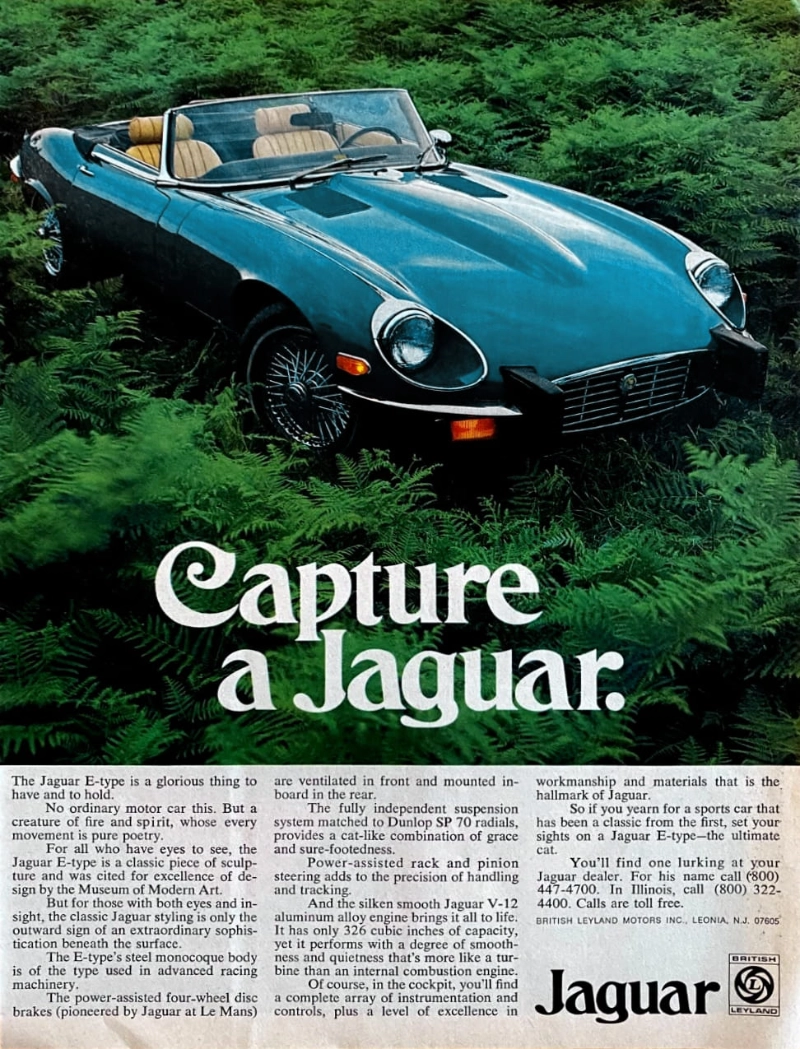
Jaguar E-type vintage auto ad in British racing green; Capture a Jaguar
When Racing Needed Colors—Britain Chose Green
At the dawn of the 20th century, as cars stopped being novelties and started being fast, racing organizers began assigning national colors. France went blue, Italy took red, Germany white (and later silver). When the Gordon Bennett Cup was created around 1900, this idea of national racing colors started to cement itself.
In 1902, the British team won the Cup, which meant the 1903 race had to be held on British soil. England, though, was squeamish about closing public roads for high-speed lunacy. Ireland—then still part of the United Kingdom—had a more relaxed attitude. So the solution was simple: take the race to the Irish countryside.
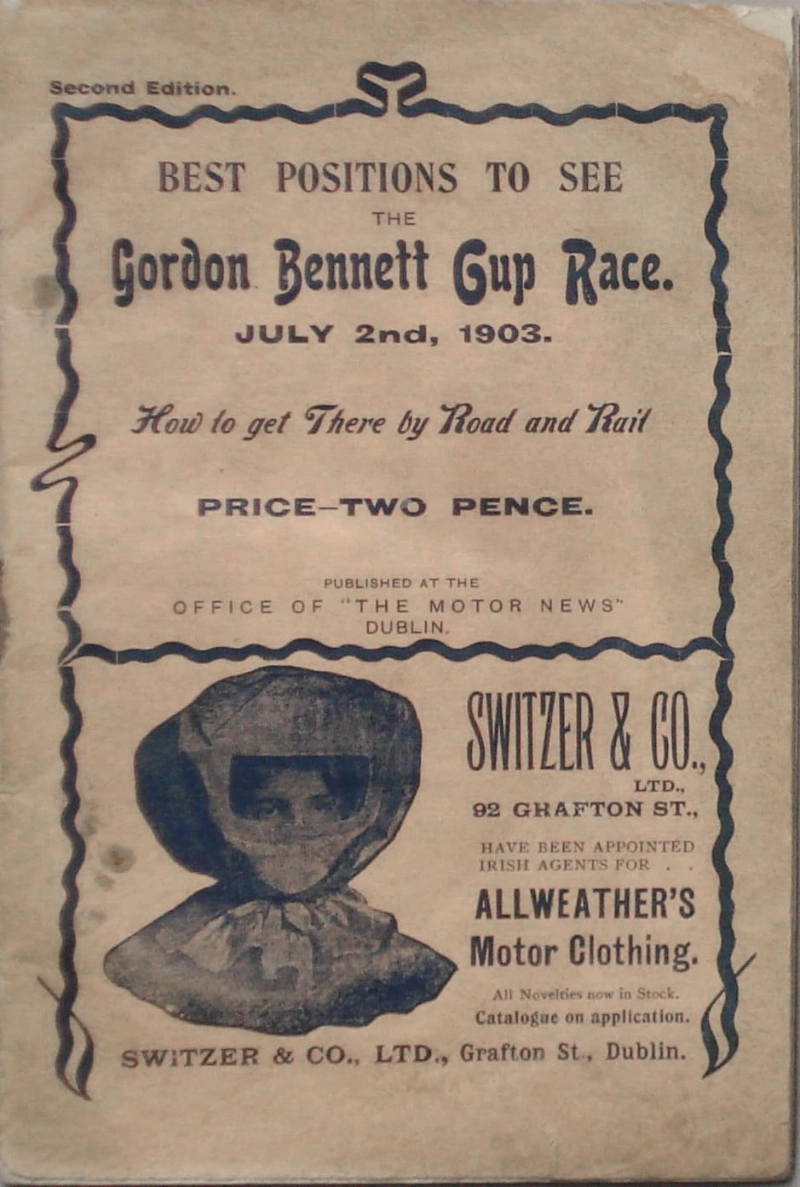
Newspaper ad for the 1903 Bennett Gordon Cup in Ireland
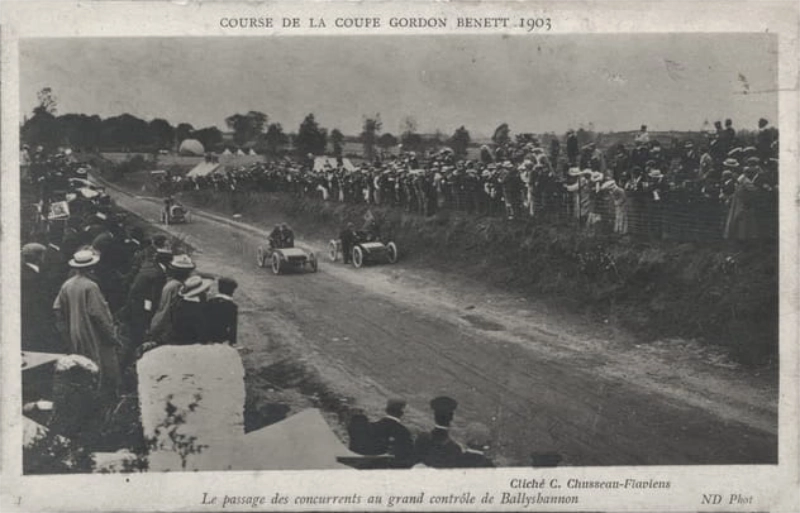
Postcard for the 1903 Bennett Gordon Cup in Ireland
A road circuit was mapped out between Kildare, Kilcullen, Monasterevin, and Athy, threading through Counties Kildare and Carlow. To honor the host land—and give Britain its racing identity—there was a requirement: the British entries would race in green. Not black, not bare metal. Green. A bold, bright emerald/kelly shade that echoed the fields they were tearing past.
That was the birth of what we now call British Racing Green.
The Color That Grew Up with the Cars
Early on, that green was lighter and fresher than the brooding forest tones many of us love today. Picture those spindly, open cars with their big, exposed engines and skinny tires, painted in a vivid green that popped against the dusty roads and stone walls. No helmets, no seatbelts—just men in goggles and dustcoats, hanging on while their green projectiles hammered across Irish tarmac and gravel.
Over time, as the sport matured and the cars grew more sophisticated, the color evolved too. The tone deepened—less springtime meadow, more dense forest. That’s the hue that got burned into our brains:
Draped over long-nosed Jaguars hunting down the Mulsanne Straight.
Wrapping Aston Martins with straight-sixes and V8s singing through the trees.
Coating fragile, wiry Lotus racers that weighed about as much as the driver’s lunch.
By then, British Racing Green was more than paint. It was the uniform of British motorsport.
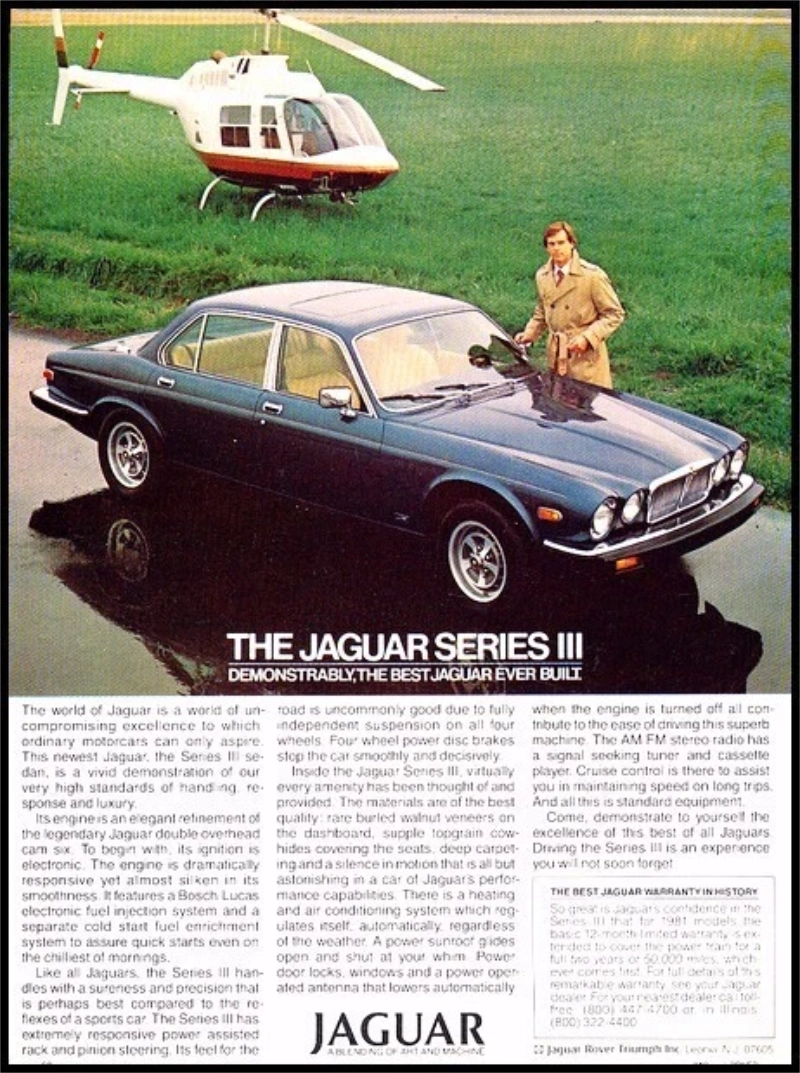
Jaguar Series III vintage auto ad; Demonstrably, the best Jaguar yet
Why British Racing Green Hits Enthusiasts So Deeply
Ask any long-time car nut and they’ll tell you: some colors just belong on certain cars. BRG is at the top of that list.
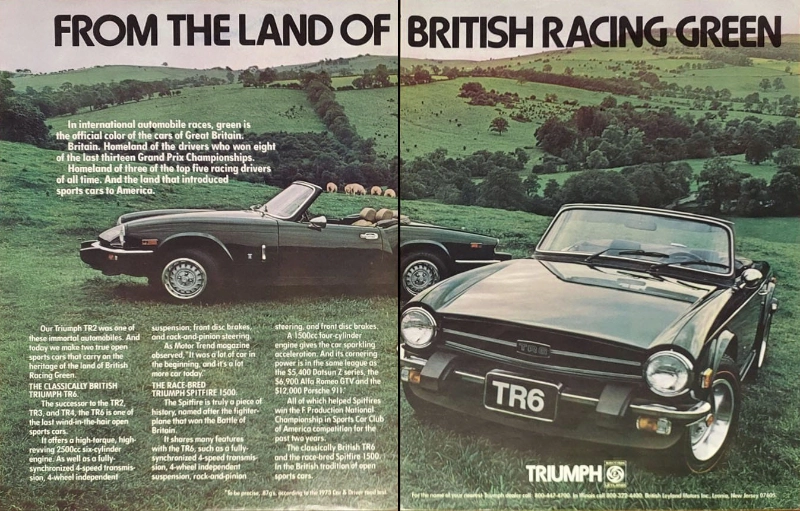
Triumph vintage auto ad; From the land of British Racing Green
On a bright day, it shimmers quietly—no neon, no pearl, just a subtle metallic depth that rewards a second look. Under dull skies (and let’s be honest, that’s the default in much of Britain and Ireland), it looks composed and dignified, like an old tweed jacket that never goes out of style.
Pair that exterior with a cabin trimmed in warm tan or biscuit leather and maybe a bit of walnut veneer, and it’s pure sensory nostalgia:
The smell of old leather that’s been heated by countless summers.
The slightly musty note of wool carpets and felt headlining.
The cold touch of a metal shifter before it warms in your hand.
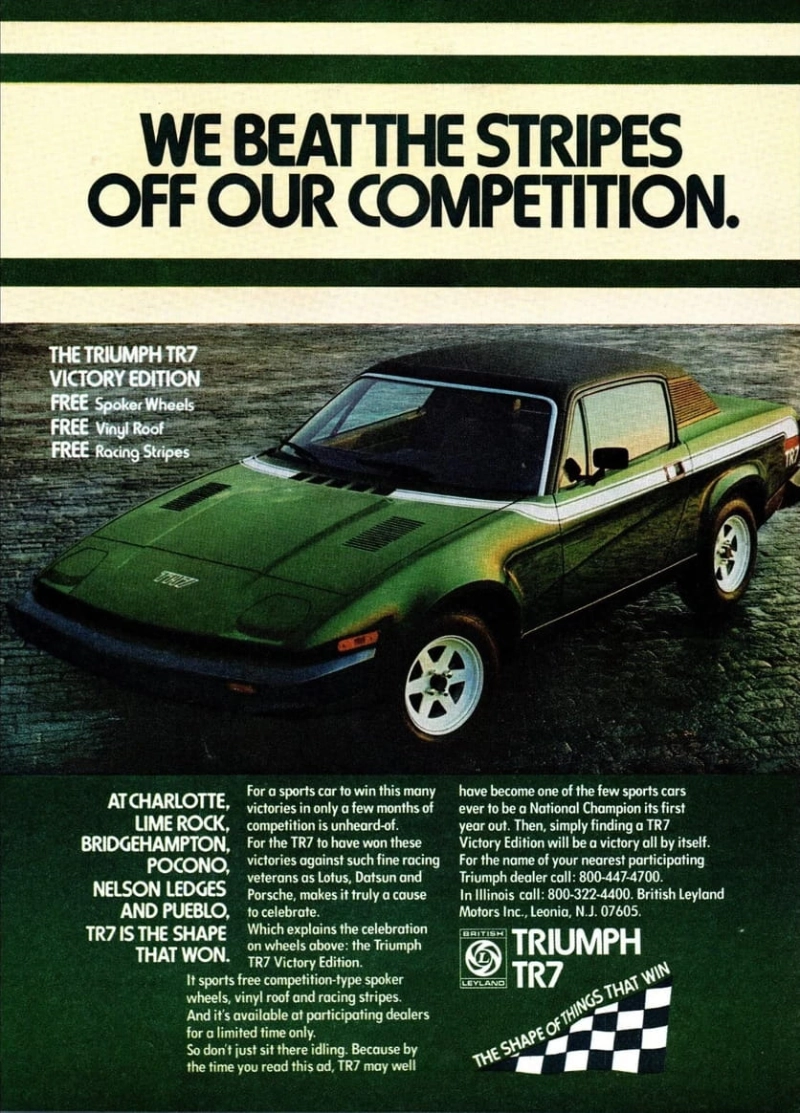
Triumph TR7 vintage auto ad; We beat the stripes off the competition
You ease the clutch out, feel that imperfect—but honest—engagement of a manual box, and as the revs climb, the car doesn’t feel like just another old machine. The green outside, the sounds and smells inside—it all works together as a single story.
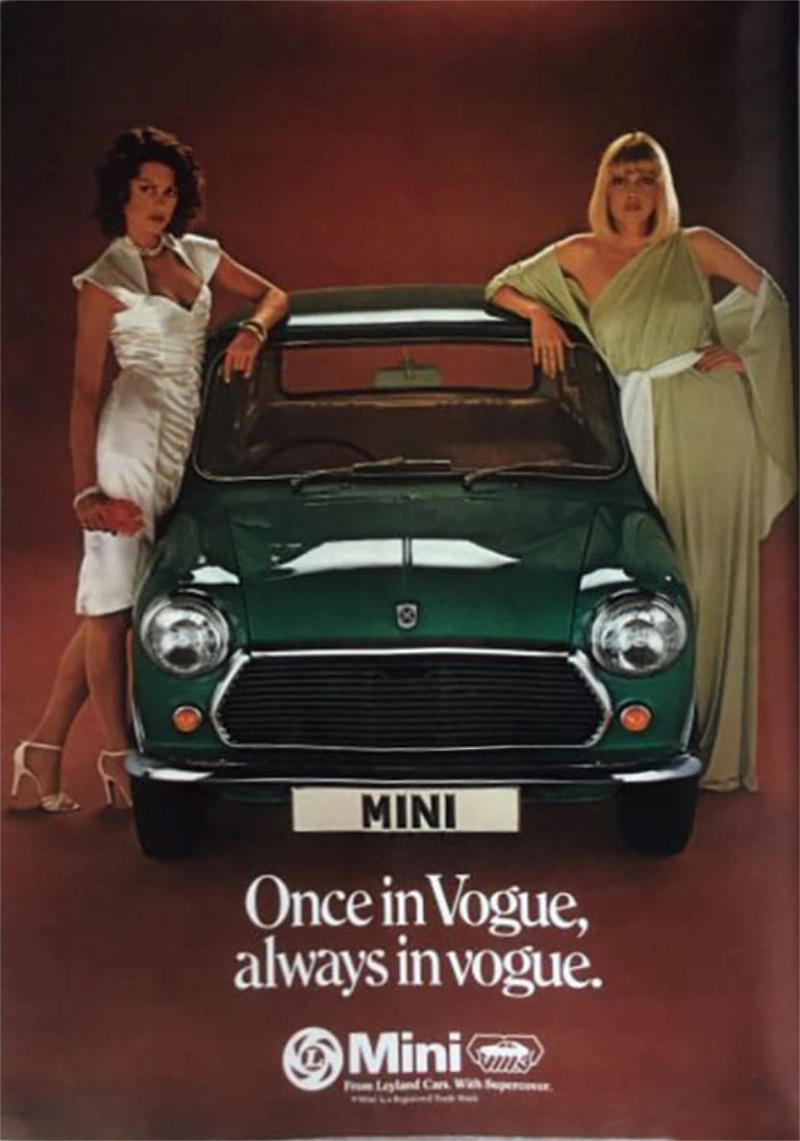
Mini Cooper vintage auto ad; Once in Vogue, always in vogue
The Irish Roads That Gave It a Soul
Here’s the part that often gets glossed over in the brochure version of history: the color that came to define British competition didn’t begin on some English test track. It began on those Irish country roads.
In 1903, when the Gordon Bennett race came to Ireland because England didn’t want it on their own roads, the British team honored the host by painting their machines green—echoing the fields and hedgerows alongside the course. That decision, born from circumstance and respect, became the seed of a legend.
Imagine those cars in period:
Open cockpits, drivers blinking through dust and grit.
Engines barking through crude exhausts, the mechanical clatter echoing off stone walls.
A blur of green cars blasting through a landscape painted in the same tone.
That’s where British Racing Green truly became something: not just a color, but an identity anchored in place.
From Kildare and Carlow to Jaguar and Aston
After 1903, the Gordon Bennett Cup moved on—Germany hosted next, then the race itself faded, replaced by newer formats like the Grand Prix. But the green stuck. British teams kept the color, again and again, until it became their image.
Decades later, when you see:
A Jaguar D-Type in British Racing Green, tail fin slicing the air…
An Aston Martin DB4, idling with that smooth straight-six lope…
A Lotus 25, tiny and purposeful, in green and yellow…
Or a Land Rover Defender, muddy and unbothered, still wearing dark green under the grime…
…you’re not just seeing “British-ness.” You’re seeing a color with Irish roots baked in.
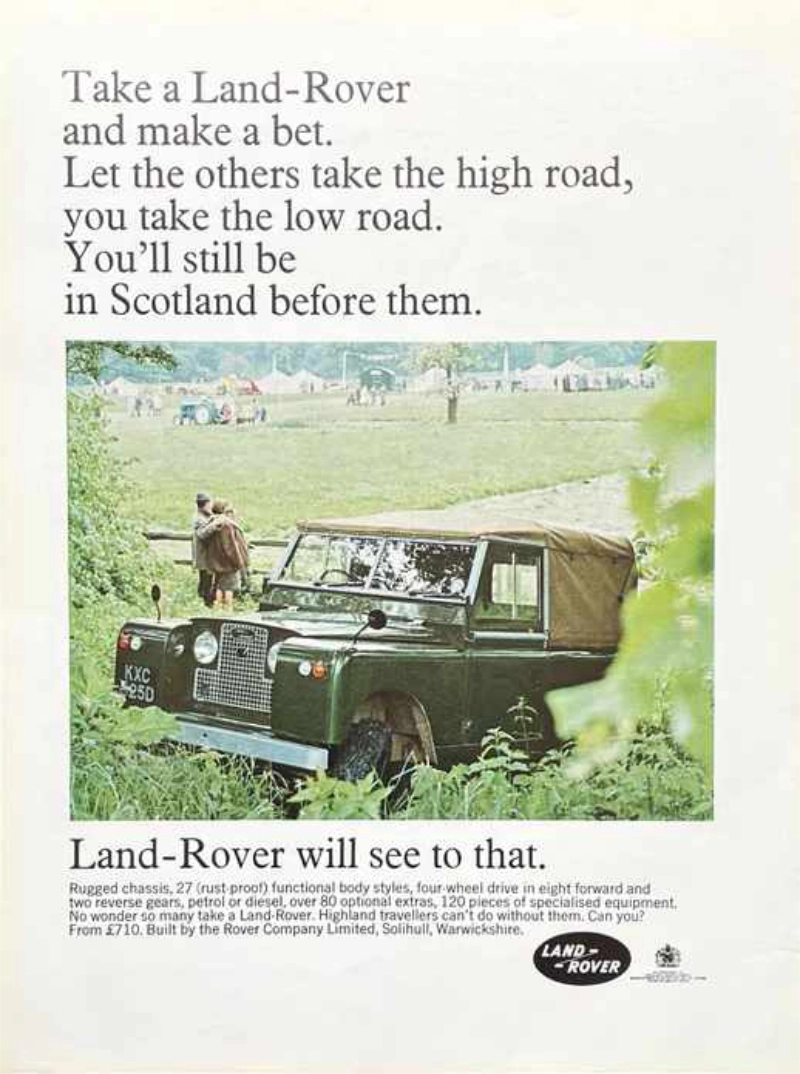
Land Rover vintage auto ad; Make a bet
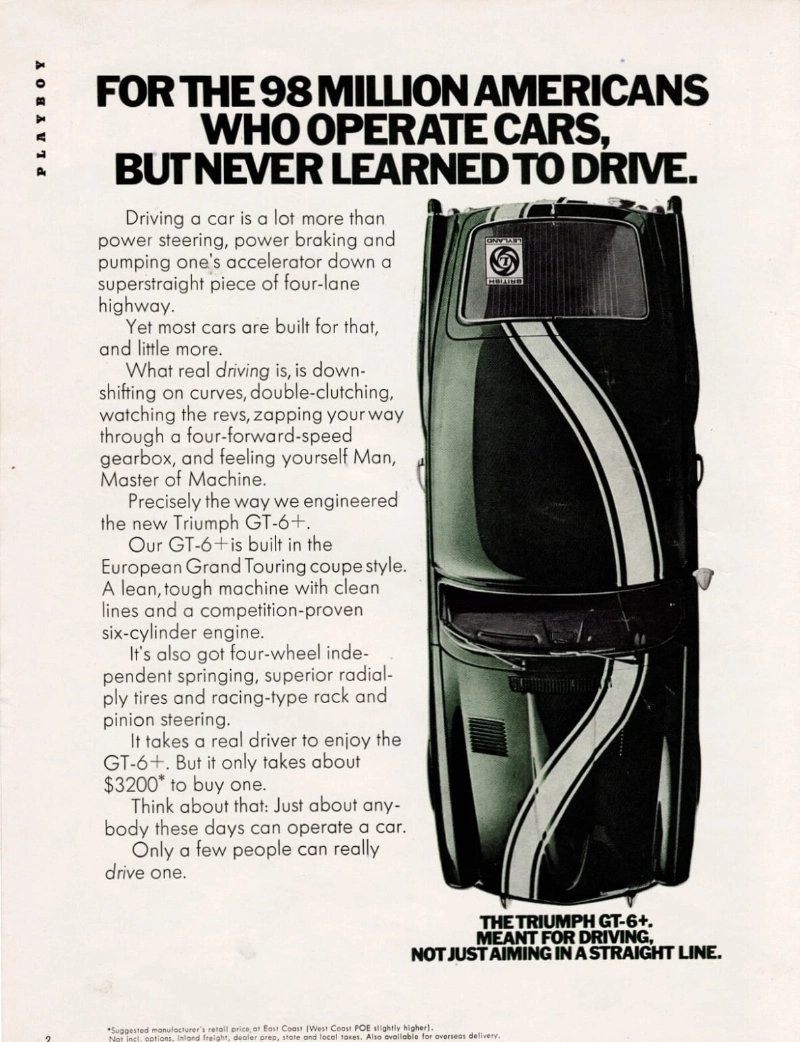
Triumph GT-6+ vintage auto ad; Meant for driving, not just aiming in a straight line.
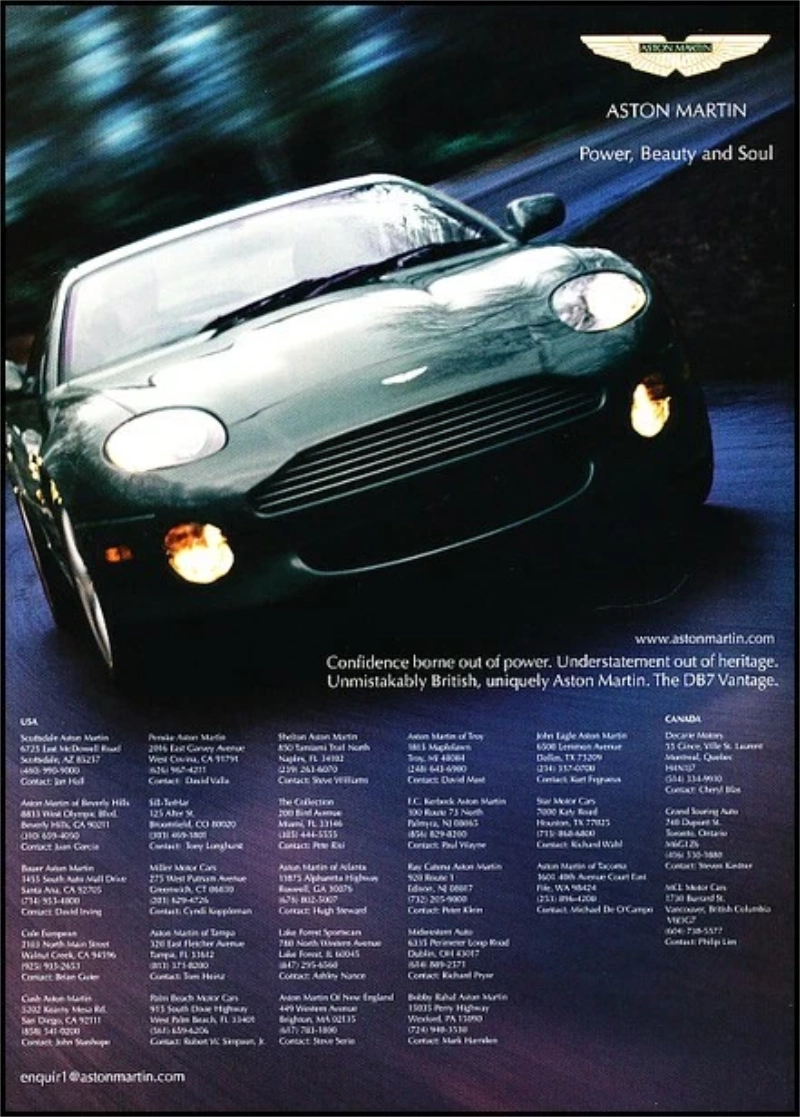
Aston Martin vintage auto ad; Power, Beauty and Soul
So… British Racing Green or Irish Racing Green?
On paper and in marketing, it will always be British Racing Green. That’s the official line, the established name, the paint code you’ll find in parts catalogs and restoration manuals. It belongs to the story of British engineering, British racing teams, British brands.
But if you peel back that top layer and look at the origin story—those 1903 roads in Kildare and Carlow, the choice to paint the British cars green as a salute to Ireland—it becomes hard not to feel that the color carries an Irish heartbeat.
Every time you see a BRG Jaguar gliding down a wet side-road, or an old MG buzzing along a lane, or a green Aston burbling out of a small town, you’re looking at more than a national racing shade. You’re seeing a rolling tribute to that moment when Britain went racing in Ireland and borrowed the color of the land beneath its wheels.
We call it British Racing Green, and that’s how it will forever be marketed and remembered in the brochures and spec sheets.
But those of us who know the backstory—the enthusiasts who understand where this all began—can’t help but smile and admit:
It really ought to be called Irish Racing Green.
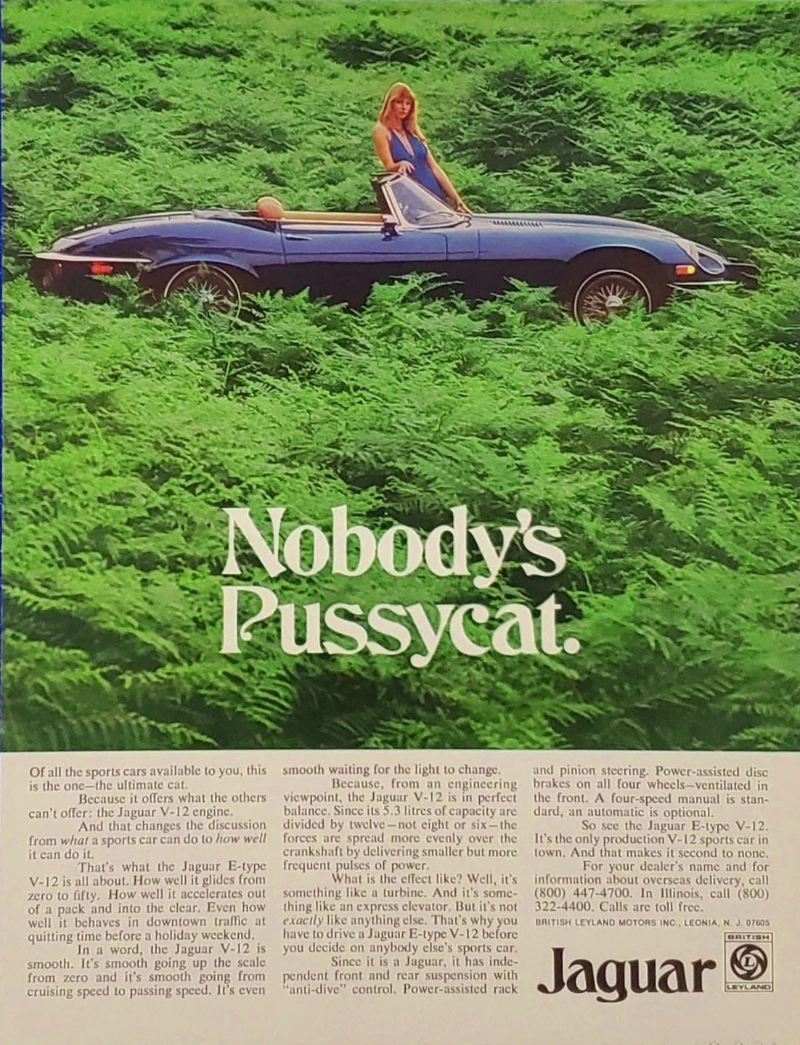
Jaguar E-type vintage auto ad; Nobody's pussycat
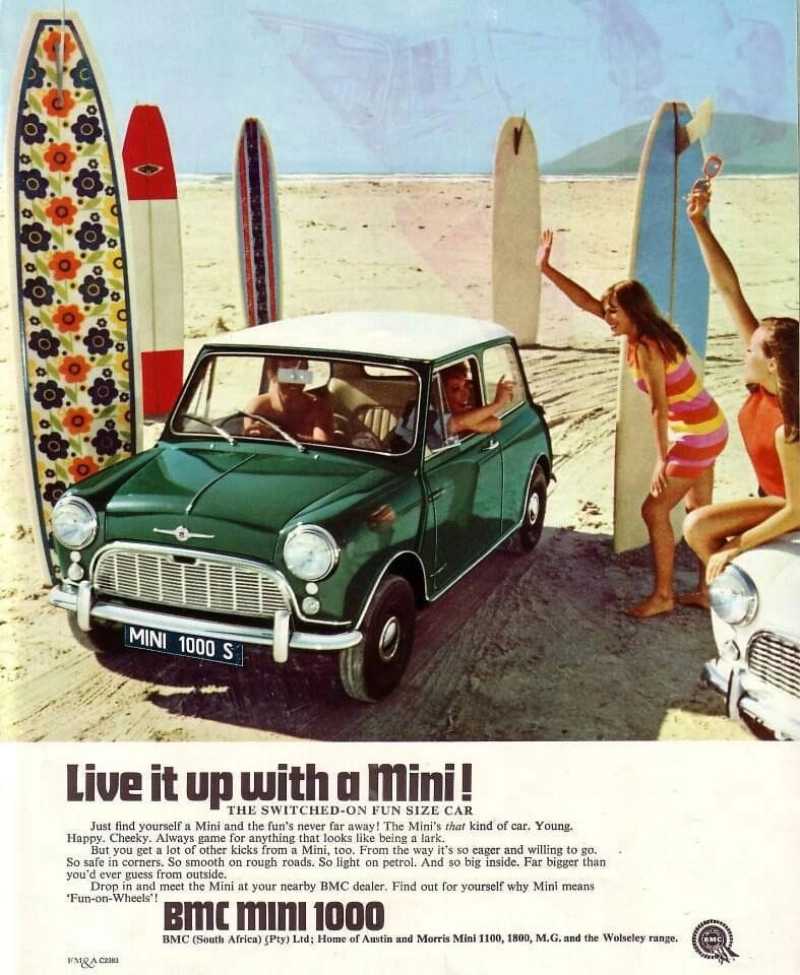
Mini Cooper vintage auto ad; Live it up with a Mini
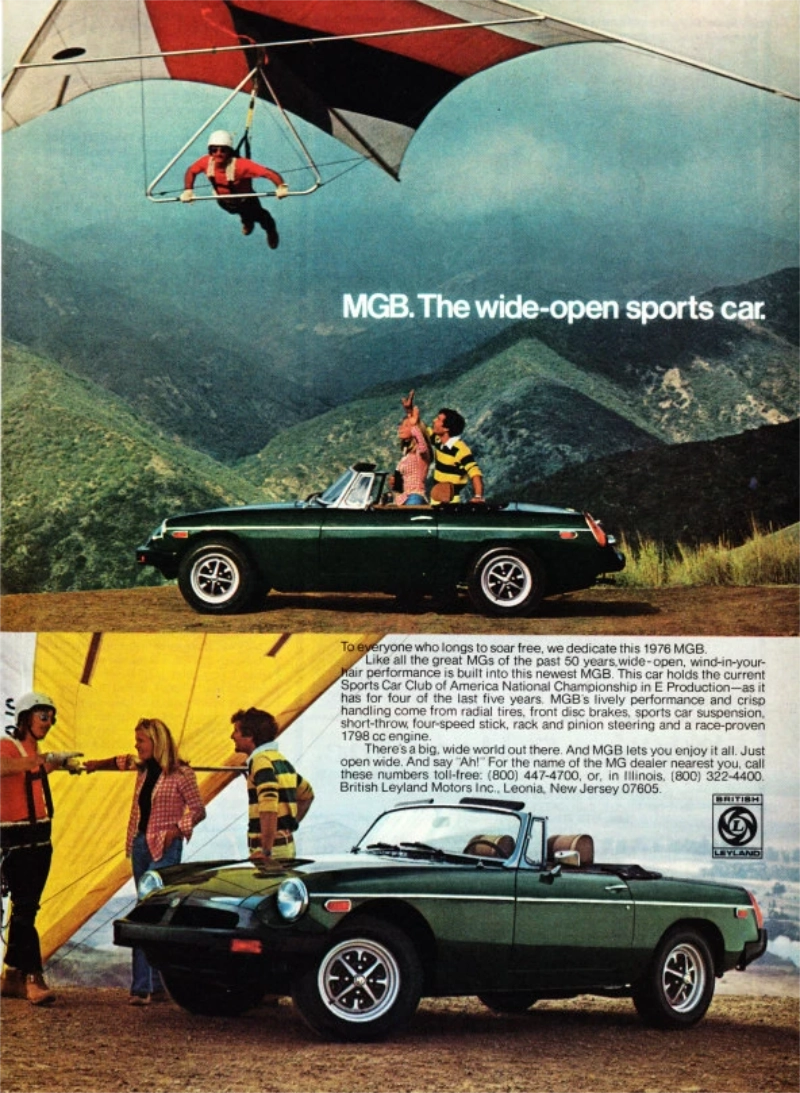
MGB vintage auto ad; wide open sports car
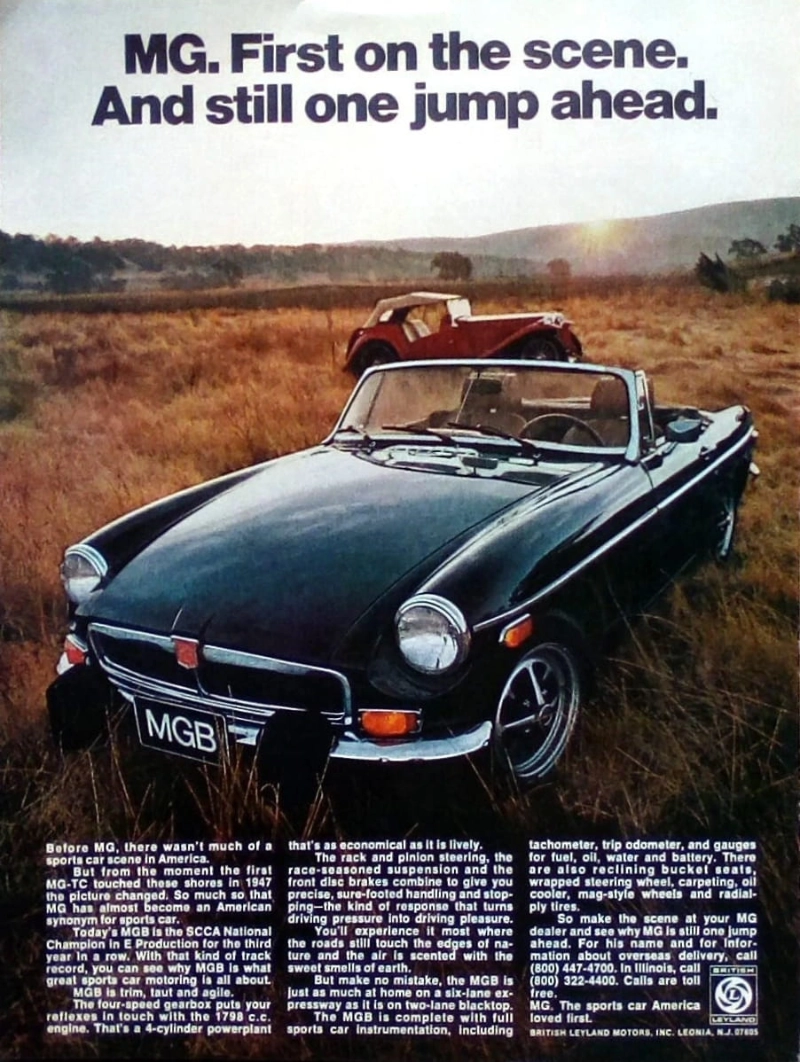
MGB vintage auto ad; First on the scene. And still one jump ahead
Think back to the first time you saw a car in proper British Racing Green.
Not on a screen, but in the metal. Maybe it was a Jaguar E-Type idling at a show, bonnet stretched to the horizon, the green catching the sun in soft waves. Maybe it was a tired old MGB you spotted in a driveway, its paint dulled and crazed but still unmistakably noble. Or maybe it was a mud-splattered Land Rover on a back road, wearing its deep green like a battle scar rather than a fashion choice. Whatever it was, that color didn’t just say “British car.” It whispered history.
Jaguar E-type vintage auto ad in British racing green; Capture a Jaguar
When Racing Needed Colors—Britain Chose Green
At the dawn of the 20th century, as cars stopped being novelties and started being fast, racing organizers began assigning national colors. France went blue, Italy took red, Germany white (and later silver). When the Gordon Bennett Cup was created around 1900, this idea of national racing colors started to cement itself.
In 1902, the British team won the Cup, which meant the 1903 race had to be held on British soil. England, though, was squeamish about closing public roads for high-speed lunacy. Ireland—then still part of the United Kingdom—had a more relaxed attitude. So the solution was simple: take the race to the Irish countryside.
Newspaper ad for the 1903 Bennett Gordon Cup in Ireland
Postcard for the 1903 Bennett Gordon Cup in Ireland
A road circuit was mapped out between Kildare, Kilcullen, Monasterevin, and Athy, threading through Counties Kildare and Carlow. To honor the host land—and give Britain its racing identity—there was a requirement: the British entries would race in green. Not black, not bare metal. Green. A bold, bright emerald/kelly shade that echoed the fields they were tearing past.
That was the birth of what we now call British Racing Green.
The Color That Grew Up with the Cars
Early on, that green was lighter and fresher than the brooding forest tones many of us love today. Picture those spindly, open cars with their big, exposed engines and skinny tires, painted in a vivid green that popped against the dusty roads and stone walls. No helmets, no seatbelts—just men in goggles and dustcoats, hanging on while their green projectiles hammered across Irish tarmac and gravel.
Over time, as the sport matured and the cars grew more sophisticated, the color evolved too. The tone deepened—less springtime meadow, more dense forest. That’s the hue that got burned into our brains:
Draped over long-nosed Jaguars hunting down the Mulsanne Straight.
Wrapping Aston Martins with straight-sixes and V8s singing through the trees.
Coating fragile, wiry Lotus racers that weighed about as much as the driver’s lunch.
By then, British Racing Green was more than paint. It was the uniform of British motorsport.
Jaguar Series III vintage auto ad; Demonstrably, the best Jaguar yet
Why British Racing Green Hits Enthusiasts So Deeply
Ask any long-time car nut and they’ll tell you: some colors just belong on certain cars. BRG is at the top of that list.
Triumph vintage auto ad; From the land of British Racing Green
On a bright day, it shimmers quietly—no neon, no pearl, just a subtle metallic depth that rewards a second look. Under dull skies (and let’s be honest, that’s the default in much of Britain and Ireland), it looks composed and dignified, like an old tweed jacket that never goes out of style.
Pair that exterior with a cabin trimmed in warm tan or biscuit leather and maybe a bit of walnut veneer, and it’s pure sensory nostalgia:
The smell of old leather that’s been heated by countless summers.
The slightly musty note of wool carpets and felt headlining.
The cold touch of a metal shifter before it warms in your hand.
Triumph TR7 vintage auto ad; We beat the stripes off the competition
You ease the clutch out, feel that imperfect—but honest—engagement of a manual box, and as the revs climb, the car doesn’t feel like just another old machine. The green outside, the sounds and smells inside—it all works together as a single story.
Mini Cooper vintage auto ad; Once in Vogue, always in vogue
The Irish Roads That Gave It a Soul
Here’s the part that often gets glossed over in the brochure version of history: the color that came to define British competition didn’t begin on some English test track. It began on those Irish country roads.
In 1903, when the Gordon Bennett race came to Ireland because England didn’t want it on their own roads, the British team honored the host by painting their machines green—echoing the fields and hedgerows alongside the course. That decision, born from circumstance and respect, became the seed of a legend.
Imagine those cars in period:
Open cockpits, drivers blinking through dust and grit.
Engines barking through crude exhausts, the mechanical clatter echoing off stone walls.
A blur of green cars blasting through a landscape painted in the same tone.
That’s where British Racing Green truly became something: not just a color, but an identity anchored in place.
From Kildare and Carlow to Jaguar and Aston
After 1903, the Gordon Bennett Cup moved on—Germany hosted next, then the race itself faded, replaced by newer formats like the Grand Prix. But the green stuck. British teams kept the color, again and again, until it became their image.
Decades later, when you see:
A Jaguar D-Type in British Racing Green, tail fin slicing the air…
An Aston Martin DB4, idling with that smooth straight-six lope…
A Lotus 25, tiny and purposeful, in green and yellow…
Or a Land Rover Defender, muddy and unbothered, still wearing dark green under the grime…
…you’re not just seeing “British-ness.” You’re seeing a color with Irish roots baked in.
Land Rover vintage auto ad; Make a bet
Triumph GT-6+ vintage auto ad; Meant for driving, not just aiming in a straight line.
Aston Martin vintage auto ad; Power, Beauty and Soul
So… British Racing Green or Irish Racing Green?
On paper and in marketing, it will always be British Racing Green. That’s the official line, the established name, the paint code you’ll find in parts catalogs and restoration manuals. It belongs to the story of British engineering, British racing teams, British brands.
But if you peel back that top layer and look at the origin story—those 1903 roads in Kildare and Carlow, the choice to paint the British cars green as a salute to Ireland—it becomes hard not to feel that the color carries an Irish heartbeat.
Every time you see a BRG Jaguar gliding down a wet side-road, or an old MG buzzing along a lane, or a green Aston burbling out of a small town, you’re looking at more than a national racing shade. You’re seeing a rolling tribute to that moment when Britain went racing in Ireland and borrowed the color of the land beneath its wheels.
We call it British Racing Green, and that’s how it will forever be marketed and remembered in the brochures and spec sheets.
But those of us who know the backstory—the enthusiasts who understand where this all began—can’t help but smile and admit:
It really ought to be called Irish Racing Green.
Jaguar E-type vintage auto ad; Nobody's pussycat
Mini Cooper vintage auto ad; Live it up with a Mini
MGB vintage auto ad; wide open sports car
MGB vintage auto ad; First on the scene. And still one jump ahead
Cruise Night Hero vintage auto ad inspired t-shirts
Looking for t-shirts that showcase your love for cars? Look no further! Check out our collection of classic auto ad inspired t-shirts, new designs added weekly. Show off your style and passion with these unique tees, available now in our store.