
November 11, 1926. That's the day the federal government gave a highway a number — 2,448 miles, eight states, Chicago to Santa Monica. This year is the Route 66 100th anniversary. Somewhere in that century of vintage car ads is a masterclass in advertising. It's the story of how the industry stopped selling cars and started selling a feeling.
The engineering was never the point. Nobody hums a torque figure. Nobody paints a fuel economy rating on a barn roof next to a mountain range. What sold, decade after decade, across a hundred years of vintage car ads, was the road itself. A car wasn't transportation. It was a ticket out.
The Mother Road Sells Itself
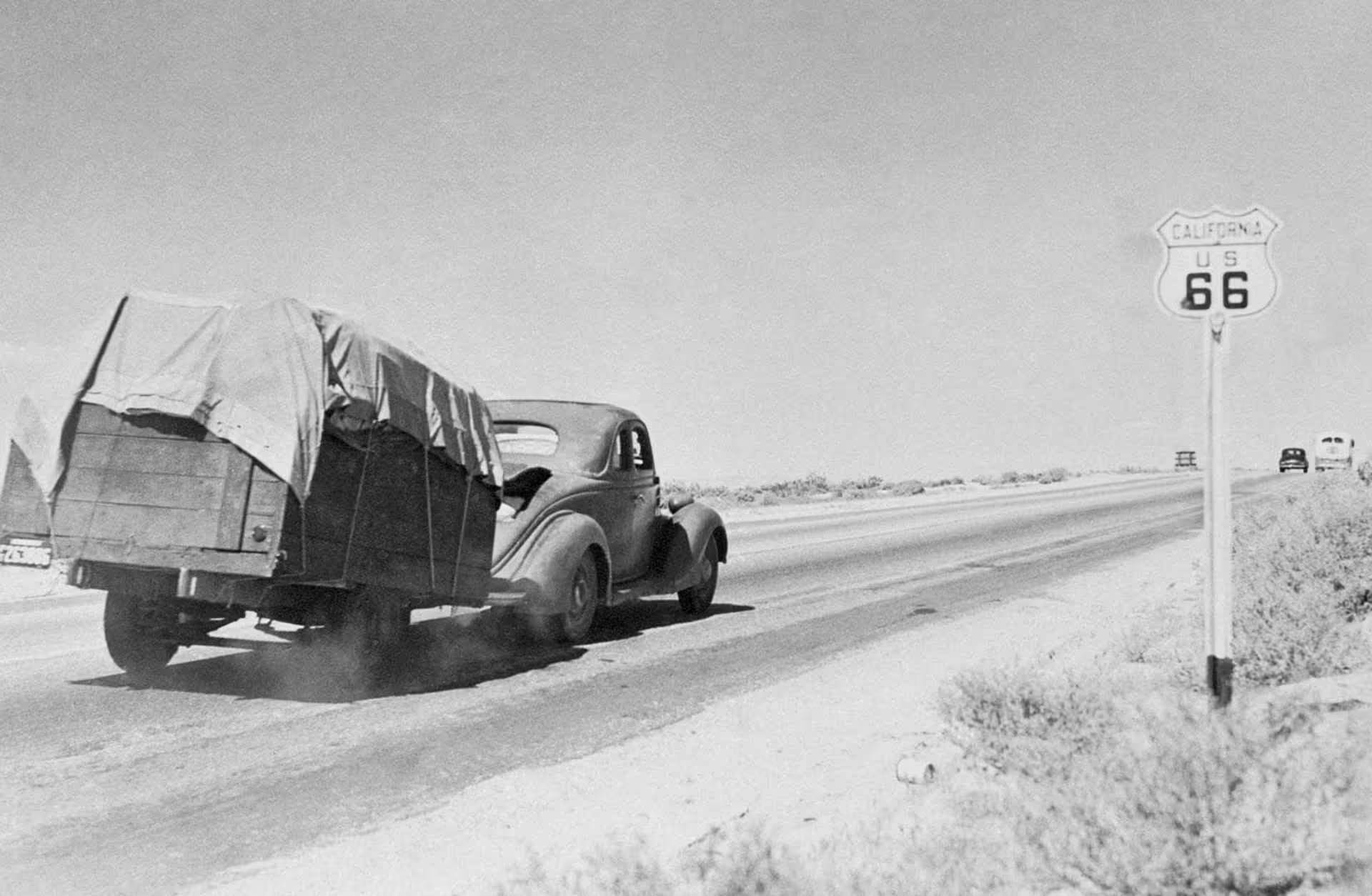
John Steinbeck named it in 1939. The Grapes of Wrath called Route 66 the Mother Road, and the name stuck because it was true. This was the road Dust Bowl families drove west out of desperation, not desire. The original story was hardship.
Somewhere between the Depression and the interstate era, the ad industry did something remarkable. It kept the road and rewrote the reason for driving it. The hardship got edited out. The romance got amplified. By the time the highway association trademarked "The Main Street of America," they weren't describing a road anymore. They were making a claim on the national imagination.
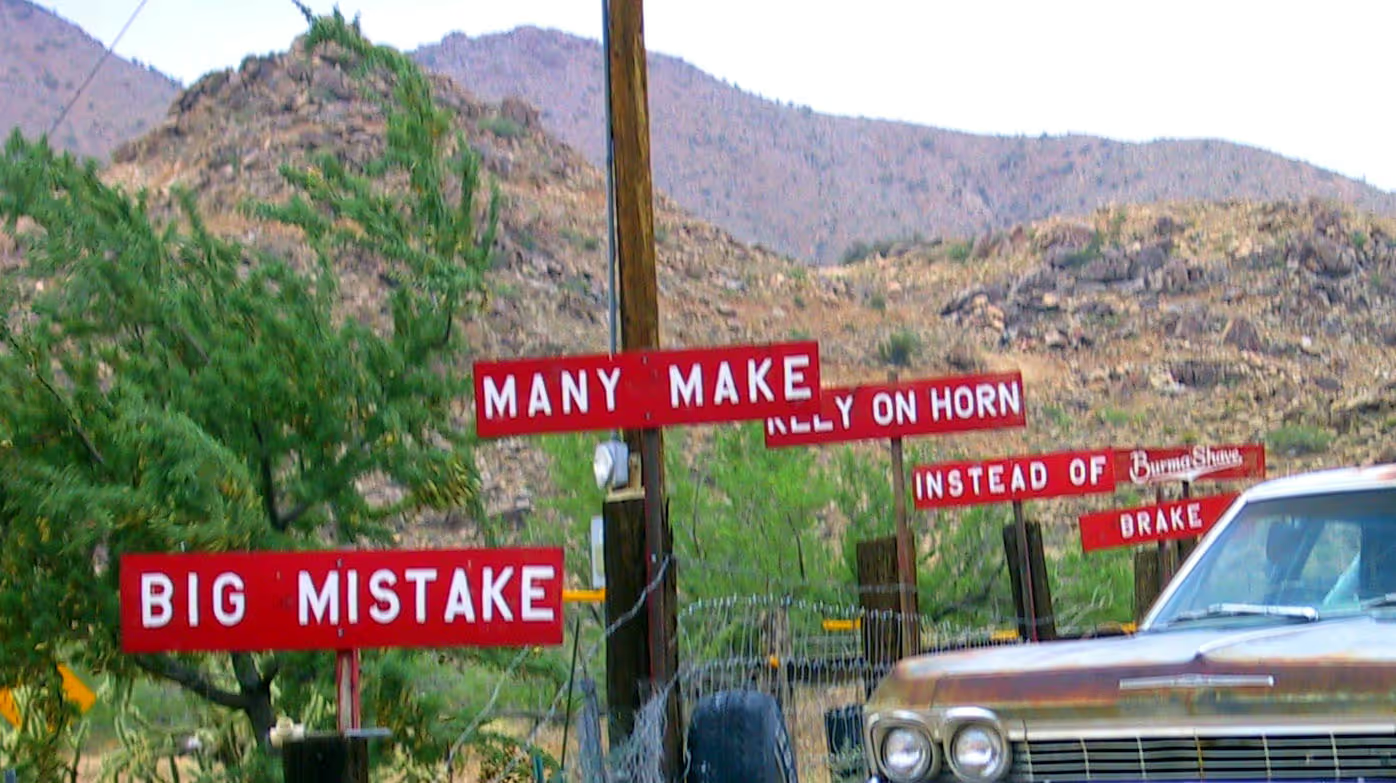
Burma-Shave got there first, and got there smaller. Starting in the 1920s, the shaving cream company planted sequential rhyming signs along the shoulder. Five or six little red boards, a joke unfolding one line at a time as the car rolled past. Nobody remembers what Burma-Shave did for anyone's face. Everybody who drove past those signs as a kid remembers reading them out loud with the whole family, racing to beat the car to the punchline. That's not product advertising. That's a road trip ritual. A shaving cream company just happened to own it.
Dinah Shore Never Mentioned Horsepower
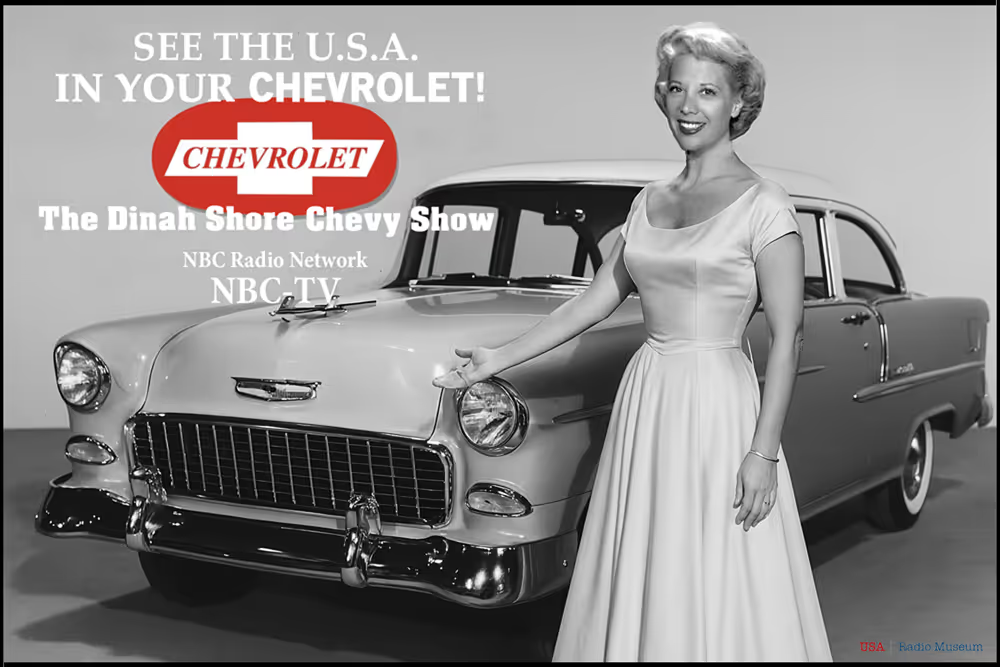
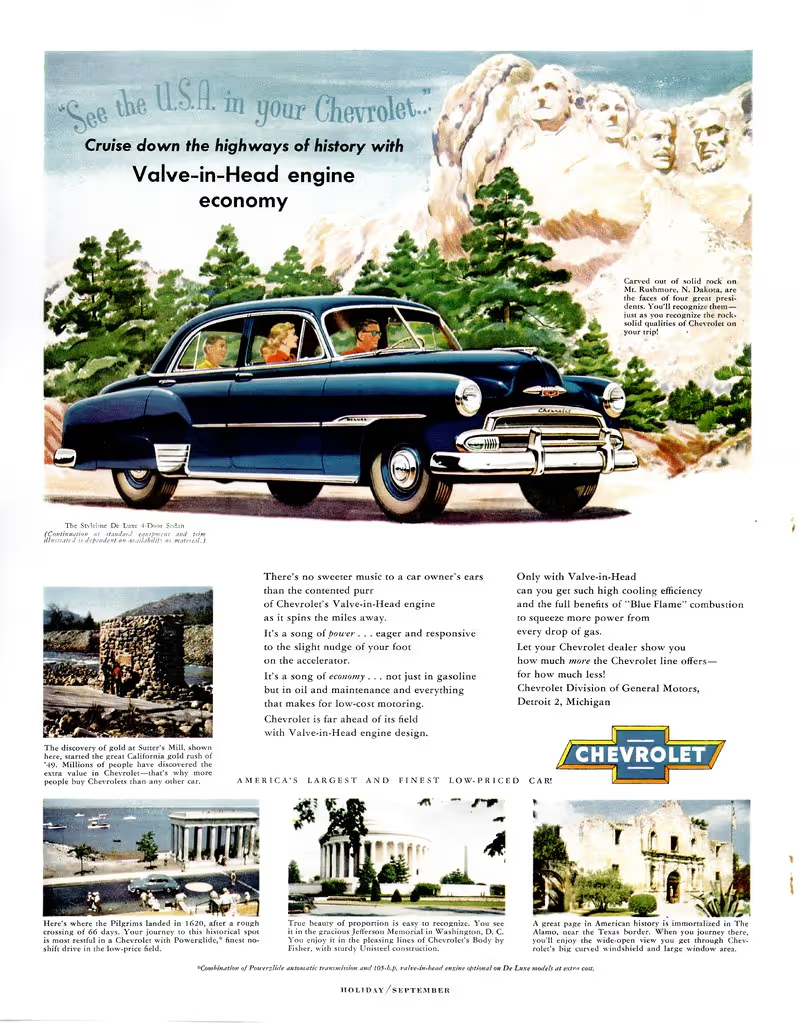
Chevrolet wrote the jingle in 1948. Campbell-Ewald handed the brand four bars that outlived every spec sheet the company ever printed: See the U.S.A. in your Chevrolet. Starting in 1951, Dinah Shore closed her Sunday night television show from the driver's seat of a brand-new Chevy. She sang America home, week after week, for years. She never once mentioned displacement.
That's the part worth sitting with. Chevrolet in 1951 had plenty of competing specs to lean on — horsepower, price, styling. Instead they put a woman's voice and a sunset on television every Sunday night and let the audience fill in the rest. The strategy worked past the point of reason. Dealerships across the country customized the jingle with their own name worked into the lyrics. A thousand independent businesses wanted to borrow the feeling of the ad, not its features. Shore kept singing it into the 1960s for the Impala, the Biscayne, the Corvair. The song outlasted three model generations because it was never really about any of them.
A New Corvette on Television, Every Three Months
If the jingle sold the idea, the television show sold the object. From 1960 to 1964, CBS aired a series called simply Route 66. Two young men, played by Martin Milner and George Maharis, drifted the highway system in a Chevrolet Corvette convertible. New town, new odd job, new trouble, every week. Chevrolet supplied the car. Not one car — a new Corvette every few months. The cars got swapped out roughly every 3,000 miles so they always looked showroom-fresh on screen, in colors chosen to read well in black and white.
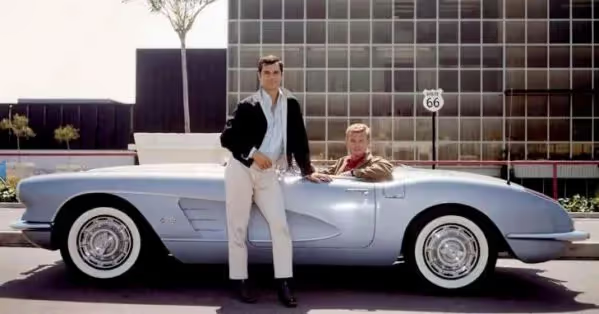
The show never ran a Chevrolet commercial that anyone would call a commercial. It didn't have to. The year Route 66 premiered, Corvette sales topped 10,000 units for the first time. No car and no television series have been that tightly welded together since. The lesson General Motors landed on almost seventy years ago still holds: the fastest way to make someone want a car is to hand it to someone they already want to be. Then let the story do the selling.
The Pitch Never Retired
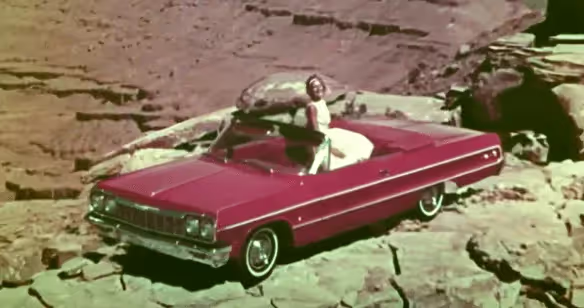
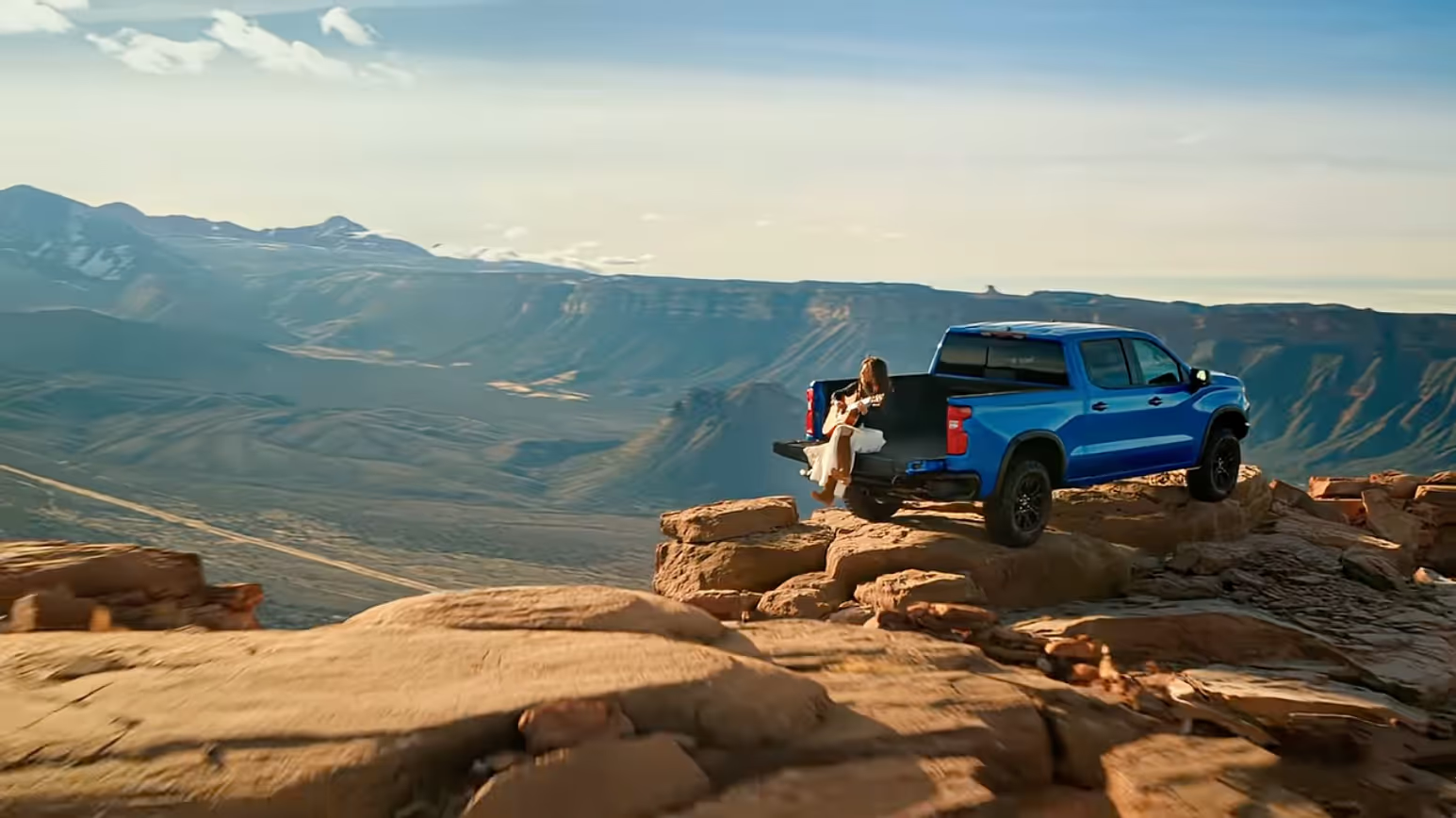
Chevrolet never actually let the jingle go. In 1964, the brand shot a red Impala convertible perched on top of Castleton Tower, a sandstone spire in Utah's Arches National Park. The tagline: "in a class of its own." They went back to the same rock in 1973 with another Impala. Then in February 2026 — the same year as the Route 66 100th anniversary, and the same year the country itself turns 250 — Chevrolet went back a third time. A Silverado ZR2 got airlifted onto Castleton Tower. Country singer Brooke Lee sang the original "See the U.S.A. in Your Chevrolet" melody with new phrasing. The ad ran during the Winter Olympics opening ceremony. Same lyrics. Same tune. Same rock.
Nobody at Chevrolet needed to explain why they went back a third time to a spot they'd already used twice. Some pitches don't need updating. They need re-staging, in a new decade, for an audience that wasn't alive for the first two. The through-line runs straight from Dinah Shore's living-room television set to a helicopter drop on a national park landmark. The car is still the ticket. The destination is still the whole country. The sales pitch is still an invitation rather than a spec sheet.
The Rest of the Freedom Playbook
Route 66 wasn't the only road being sold, and vintage car ads weren't shy about saying so. Once the industry learned the trick on the Mother Road, it applied it everywhere.
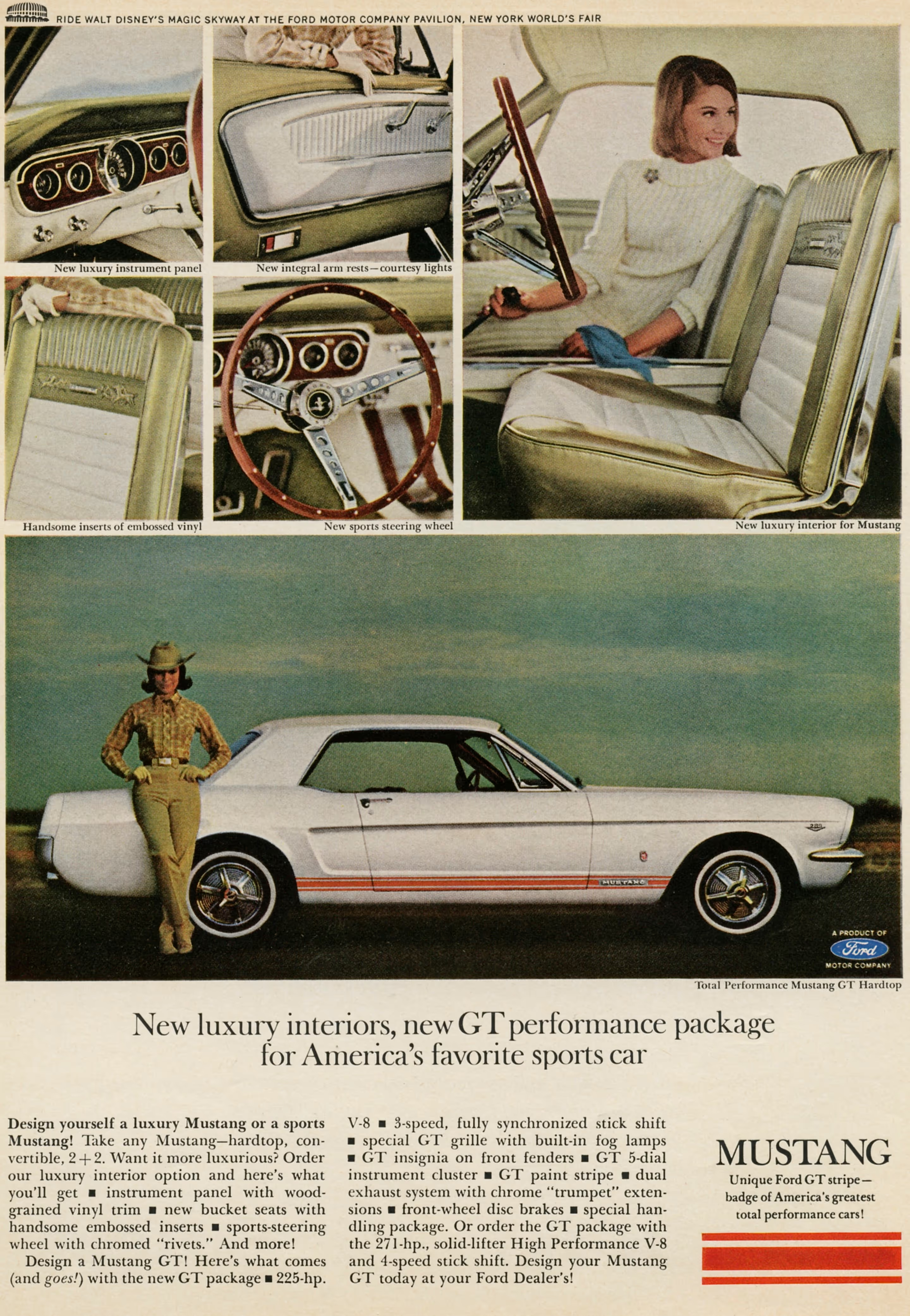
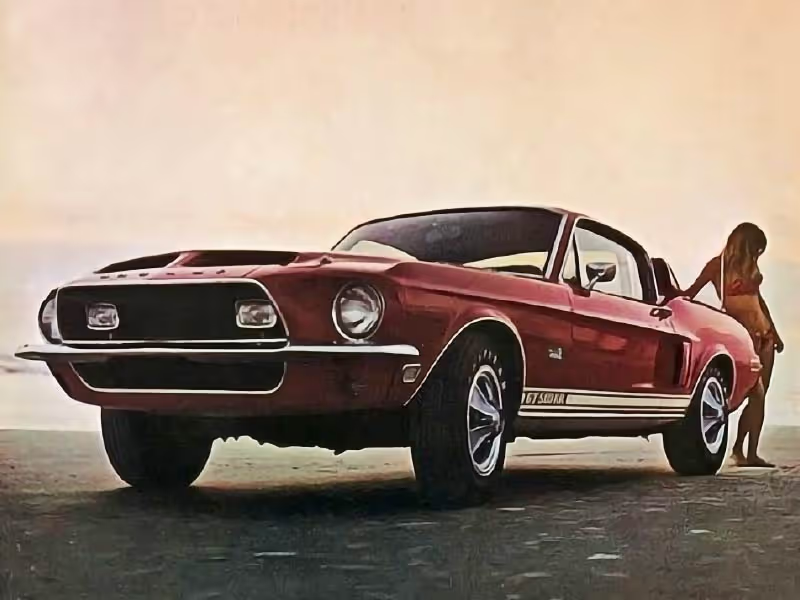
Ford introduced the Mustang on April 17, 1964. The unveiling happened at the New York World's Fair, backed by a full-network ad blitz timed to hit all three major channels at once. The early spots leaned on styling and price — "designed to be designed by you." But what actually moved 22,000 orders on day one wasn't the options sheet. It was a young, unmarried generation seeing a car that already knew where it wanted to go. Mustang didn't just sell transportation to that buyer. It sold them a version of themselves.
Jeep took the same instinct and stripped it down to four words: Go anywhere. Do anything. No horsepower number required. Oldsmobile, a decade earlier, leaned harder into performance with "Make a date with a Rocket 88." Proof the freedom pitch and the power pitch have always run side by side, competing for the same buyer's imagination. Plymouth answered its 1957 restyle with "Suddenly it's 1960!" That wasn't a feeling of the open road. It was a feeling of being ahead of it — its own kind of freedom.
Cadillac took the freedom pitch upmarket. It called the destination arrival instead of escape. The open road was still the backdrop, but the promise was status, not liberation. Buick and Pontiac spent the same decades chasing a middle path — "wide-track" handling, family-friendly comfort, the same open-highway photography everyone else used. The freedom pitch, the status pitch, and the honest-features pitch all ran at once through the 1950s and '60s, competing for the same driveway. Freedom just happened to be the one that outlasted the others in the culture's memory. It turned a purchase into a story the buyer got to keep telling.
The Wagon Didn't Need a Jingle
Not every one of the era's vintage car ads bothered with a metaphor. Some cars had to be talked into the road trip. Others were built for nothing else, and the advertising just pointed at the obvious.
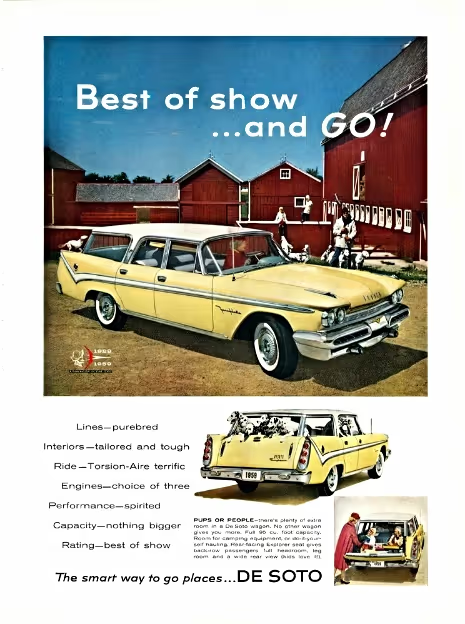
In 1959, DeSoto turned thirty. The brand marked the occasion by putting its top-of-the-line Fireflite Explorer wagon on the road with a tagline that skipped the poetry entirely: "The smart way to go places." No sunset, no ticket-out metaphor. Just a plain statement that this body style existed to leave town. Studebaker ran the same play that same year with the Lark, badging its wagon the "Play Wagon" and aiming straight at family recreation instead of commuting. Mercury kept it going into 1966 with the Colony Park. Its faux-wood trim did the work of an entire ad campaign before a single word of copy ran. The paneling itself was visual shorthand for cabins, campgrounds, and everywhere else a sedan wouldn't take you.
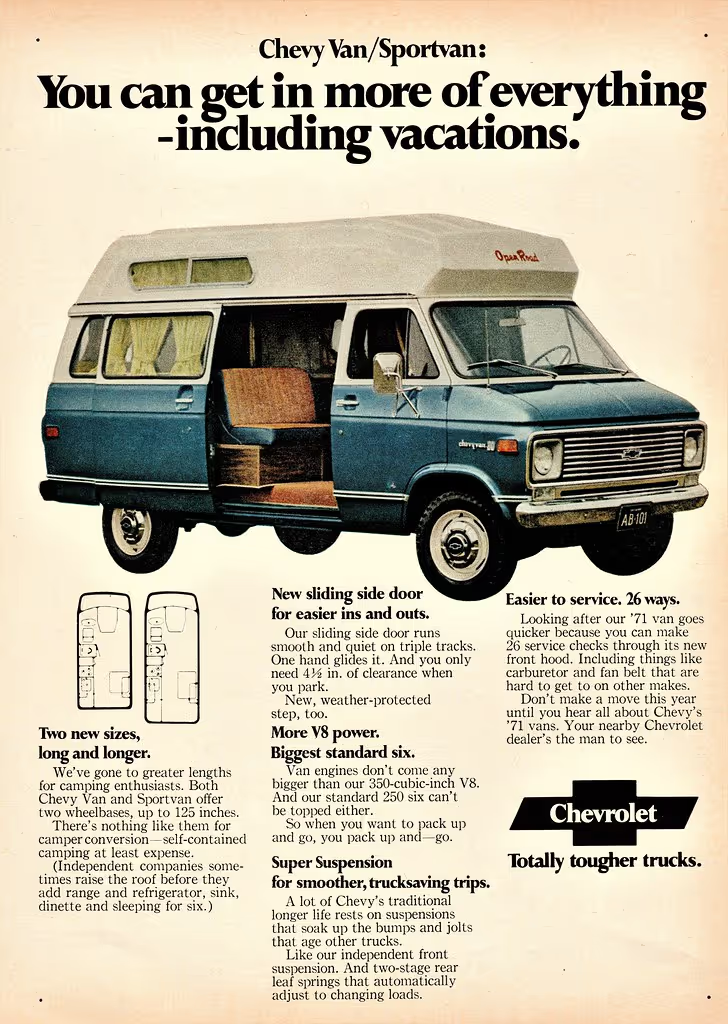
Trucks got pulled into the same story once the interstate made distance cheap. GMC ran a national truck campaign as early as 1950. By 1971, Chevrolet was selling a Chevy Van fitted out as a rolling camper, badged simply "Open Road." No longer implying the lifestyle — just naming it on the side of the vehicle. That's the freedom pitch reaching its logical end point. Eventually the ad stopped describing a feeling the car might give you. It started describing a feature the car now had. The wagon and the camper didn't need Dinah Shore. The back seat folded flat. The tailgate came down. The vehicle made its own argument.
Put the sedans and the wagons side by side and the whole era's ad strategy comes into focus. The sedans and pony cars sold a feeling because they had to invent one — a two-door coupe doesn't obviously need a highway. The wagons and campers sold a fact, because the highway was already built into the specification sheet. Both approaches ended up in the same place: a driveway, a full tank, and a family convinced the car in front of them was the reason to leave.
Infrastructure Built the Highway. Advertising Built the Myth.
None of this happened by accident. The Federal-Aid Highway Act of 1956 poured roughly $25 billion into the interstate system, still the largest public works project in American history. It physically reshaped the country around the car. Standard Oil handed out free road maps at filling stations for decades — a quiet, constant argument that a car-centered country was simply how things worked. Motor lodges and roadside attractions had their own financial reasons to make a drive feel like an adventure instead of a chore. Hollywood did the rest. From It Happened One Night in 1934 through decades of road movies, the highway became a stage for reinvention.
By the time Route 66 was formally decertified in 1985, faster, straighter interstates had replaced it piece by piece. The road itself had become almost beside the point. The feeling it had been sold on for sixty years didn't need the original pavement to survive. People still drive the old alignment on purpose today. They stop at the same roadside attractions, many restored rather than original, chasing an experience that was, in no small part, manufactured for them by people who wrote jingles and painted plywood signs for a living.
What the Route 66 100th Anniversary Actually Proves
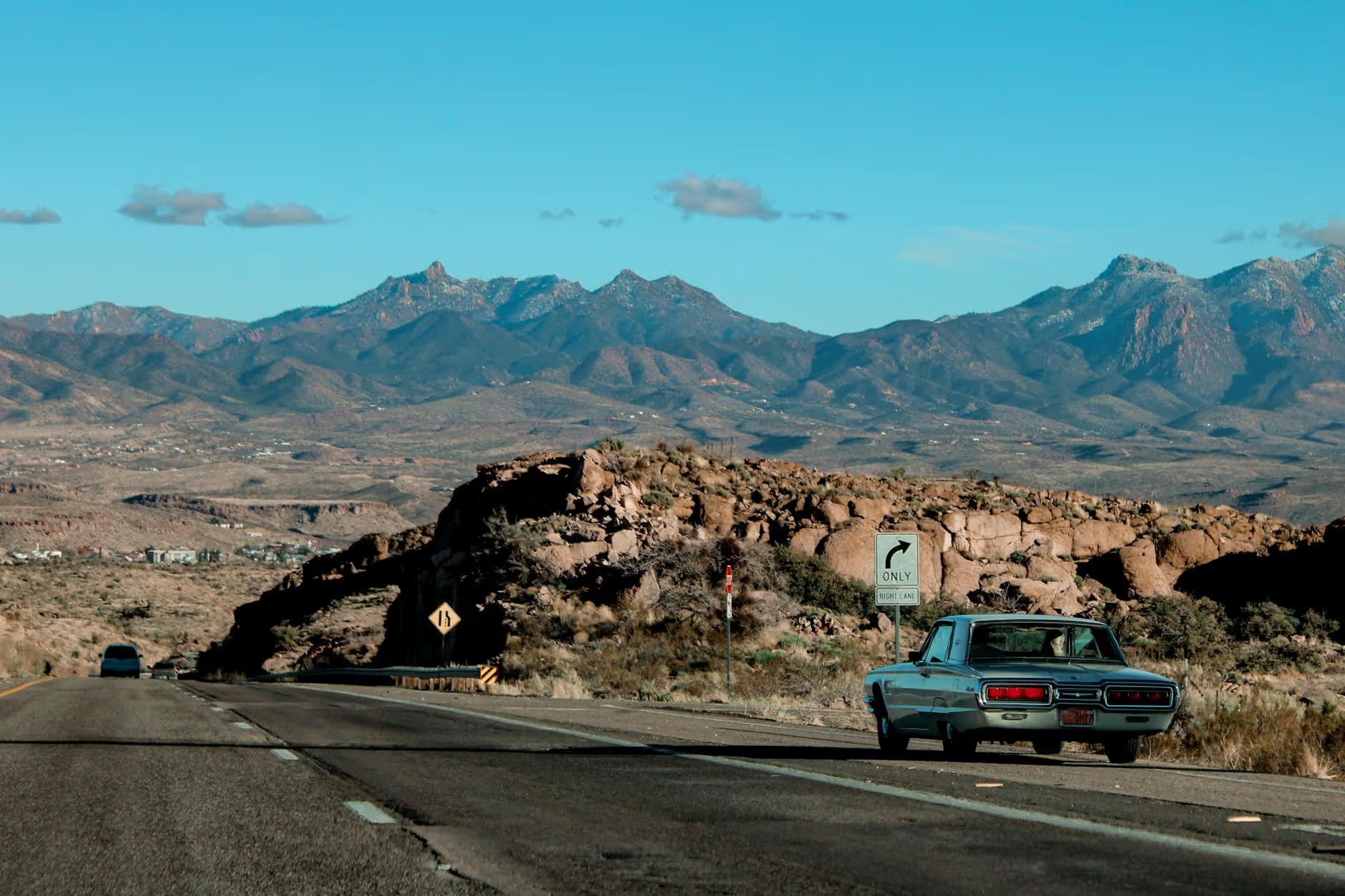
A hundred years in, nobody is nostalgic for two-lane asphalt with no shoulder and no air conditioning. They're nostalgic for what a century of vintage car ads convinced them that asphalt meant. Chevrolet, Ford, Jeep, and a shaving cream company all arrived at the same conclusion from different directions. The spec sheet tells a buyer what a car can do. The story tells them who they get to be while they're doing it.
That's the whole difference between a feature and a promise. It's the reason Route 66 is still on the map a century after it stopped being the fastest way anywhere. The Route 66 100th anniversary isn't really a celebration of the pavement. It's a celebration of every jingle, print ad, and television series that convinced America the pavement was the point.